


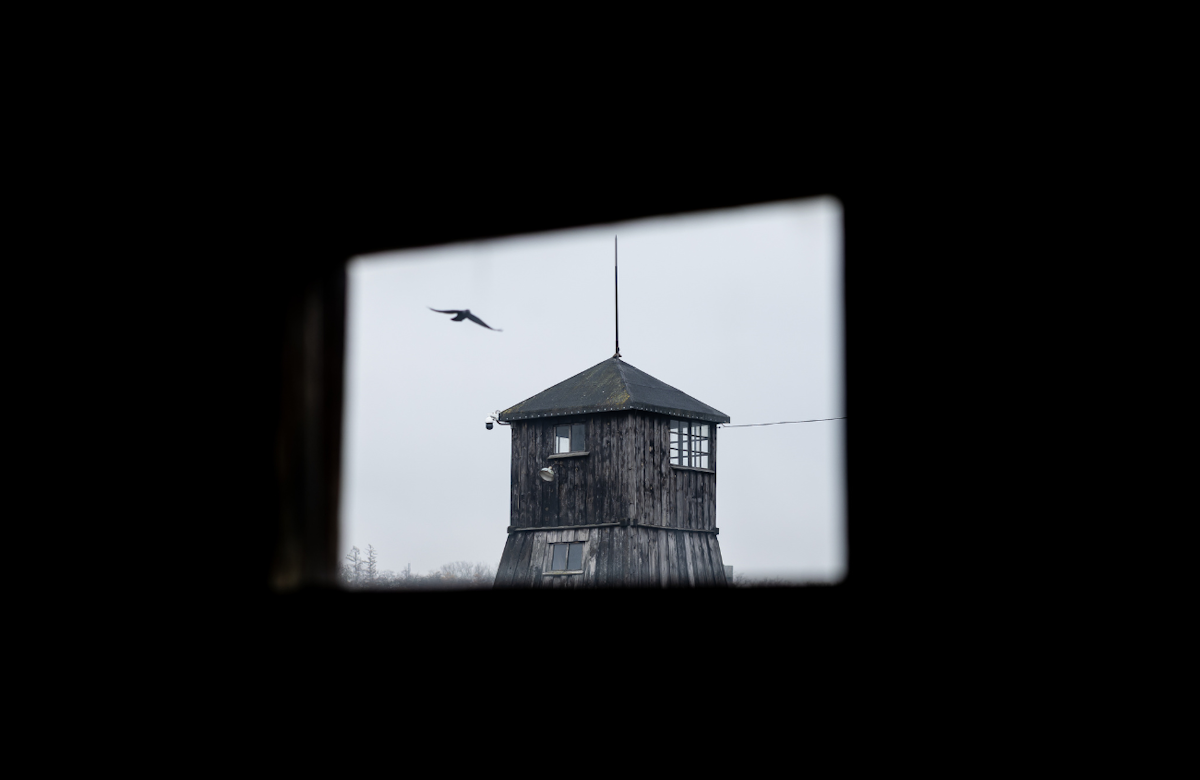
NEW YORK — The World Jewish Congress (WJC), in partnership with the Alfred Landecker Foundation, has launched an online portal dedicated to the history of Operation Reinhard in the Lublin region of formerly Nazi-occupied Poland. The platform, "Beyond Auschwitz: Places and History of the Holocaust in the Lublin District," is available to the public at aboutholocaust.org/operationreinhard.
Operation Reinhard was the deadliest single phase of the Holocaust. Directed from the city of Lublin by SS and Police Leader Odilo Globocnik, it brought together deportation, forced labor, plunder, and systematic killing in a coordinated campaign to murder the Jews of the General Government. Between March 1942 and November 1943, approximately 1.7 to 1.8 million Jews were murdered in this framework. Two of its three dedicated killing centers, Bełżec and Sobibór, stood within the Lublin District itself, alongside the concentration and extermination complex of Majdanek and a network of transit ghettos, labor camps, and execution sites. Before the war, the region was home to some 350,000 Jews and centuries of Jewish religious, cultural, and communal life — a world that was almost entirely destroyed.
Despite its scale, this history remains far less known than that of Auschwitz-Birkenau. The killing centers of Operation Reinhard were built for immediate extermination and left almost no survivors; the perpetrators dismantled the camps and attempted to erase every trace of the crime. The new portal is devoted to restoring these overlooked places to public memory. It maps and documents the sites of the Lublin District — from transit ghettos such as Izbica, Piaski, and Włodawa to the killing centers of Bełżec, Sobibór, and Majdanek — connecting the history of the Holocaust to the specific towns, camps, fields, and forests where it was carried out.
The portal was developed as part of "Beyond Auschwitz: Understanding Operation Reinhard," the joint WJC–Alfred Landecker Foundation initiative that brings senior staff of the German Bundestag and federal ministries on educational journeys to these sites. Following the program's first visits, the platform will now serve as a learning resource for future participants — supporting their preparation before traveling and their continued engagement afterward — while extending the initiative's reach to educators, students, and the wider public.
The project carries particular meaning for the Foundation: its namesake, Alfred Landecker, was deported in 1942 to the transit ghetto of Izbica, one of the central hubs feeding the Operation Reinhardt killing centers, before being murdered in this system of extermination.
The portal is now freely accessible at aboutholocaust.org/operationreinhard.

About the World Jewish Congress


About the Alfred Landecker Foundation


